
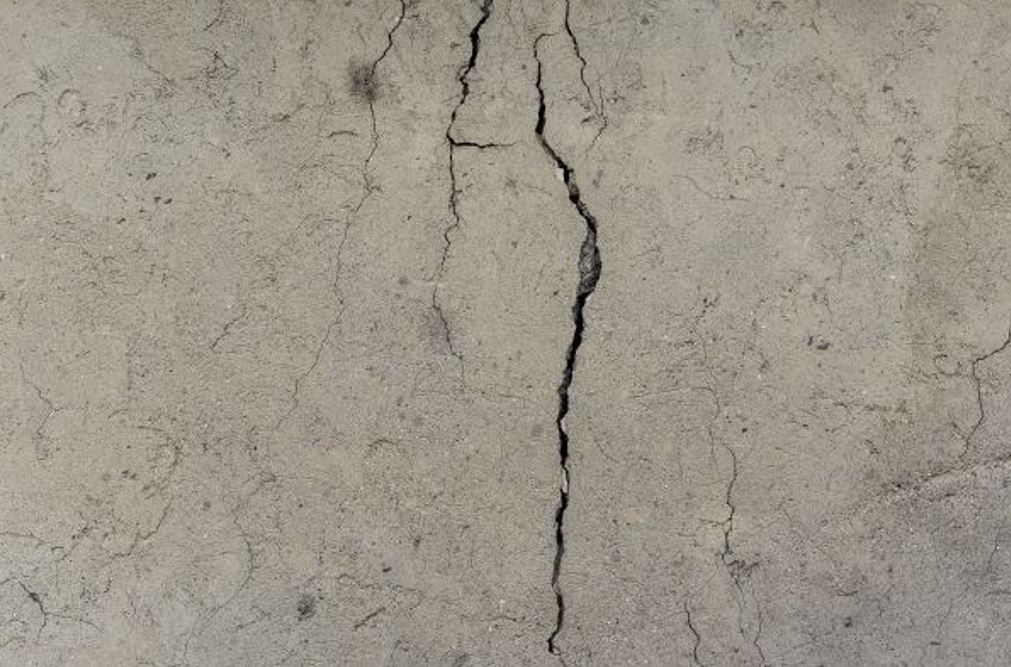
Citi-Con is a leading provider of specialist epoxy-injection solutions. Our tried-and-tested processes restore concrete strength and seal it against entry of moisture and chemicals.
Cores taken from our injection repaired concrete will often have a higher crushing strength than the host concrete. This is considering the reinforcing effect of the resin that we inject into cracks. Click here for more information on core sampling and concrete testing.
Epoxy-injection provides many benefits
Our epoxy-injection solution provides many benefits, not least of which is the fact that it is safe and environmentally friendly. This supports our focus on ensuring that Citi-Con’s operations are safe and have a limited impact on the environment.
Furthermore, it is practical to execute and cost-effective, reducing repair time and costs. This also makes it ideally suited to working in operational areas which is so often the case with concrete repairs.
Our epoxy-injection solution is also effective, restoring structural elements to their original strength. It provides long-lasting, water-tight protection with only minimal maintenance required over the lifecycle of the repair.
Furthermore, our epoxy-injection solution provides an aesthetically pleasing internal or external finish.
Epoxy-injection methods approved
Our epoxy-injection methods are approved by engineers. This is after structural cracks have been thoroughly evaluated for dynamic or static properties.
It is absolutely critical that the underlying cause of the problem first be identified before executing concrete repair. A structure will simply crack again at the weakest point if it is still under stress. This is despite the diligent execution of epoxy-injection methods as the underlying cause is still present.
If a crack is dynamic, for example, epoxy-injection, alone, will not provide the necessary strength to the concrete element. It will only safeguard against moisture and dirt ingress but will not provide structural integrity. Refer to Dynamic Cracks vs. Static Cracks: Effects and Repair Techniques – theconstructor.org. This article provides insightful information on the difference between static and dynamic cracks.
Crack-injection executed by experts
Our crack-injection methods are executed by experts who have accumulated many years of experience in the field.
Preparation is key to the success of any concrete repair project and epoxy injection is certainly no exception.
The surface over the entire length of the crack is first wire brushed to remove debris.
A “V”-cut is chased at least 10mm deep and 20mm wide into the crack if the surface is unsound. Thereafter, debris is removed from the substrate.
We then drill a 6mm diameter hole into the crack to about a 50mm depth. This while ensuring that the crack is positioned within the sides of the hole. Depending on the width of the crack, the holes should be between 250mm and 300mm centres.
Thereafter, debris that may block the crack in the sides of the hole is removed using a fine stiff wire.
Grease nipples are then sealed into the hole. Afterwards, their heads are covered with a short length of rubber or plastic tubing. This is to ensure that the inlet is kept free of epoxy. We will also make sure that the outlets are kept free of epoxy.
Citi-Con’s specialist epoxy-injection solutions
Citi-Con is a leading provider of specialist epoxy-injection solutions. Our tried-and-tested processes restore concrete strength and seal it against entry of moisture and chemicals.
Cores taken from our injection repaired concrete will often have a higher crushing strength than the host concrete. This is considering the reinforcing effect of the resin that we inject into cracks. Click here for more information on core sampling and concrete testing.
Epoxy-injection provides many benefits
Our epoxy-injection solution provides many benefits, not least of which is the fact that it is safe and environmentally friendly. This supports our focus on ensuring that Citi-Con’s operations are safe and have a limited impact on the environment.
Furthermore, it is practical to execute and cost-effective, reducing repair time and costs. This also makes it ideally suited to working in operational areas which is so often the case with concrete repairs.
Our epoxy-injection solution is also effective, restoring structural elements to their original strength. It provides long-lasting, water-tight protection with only minimal maintenance required over the lifecycle of the repair.
Furthermore, our epoxy-injection solution provides an aesthetically pleasing internal or external finish.
Epoxy-injection methods approved
Our epoxy-injection methods are approved by engineers. This is after structural cracks have been thoroughly evaluated for dynamic or static properties.
It is absolutely critical that the underlying cause of the problem first be identified before executing concrete repair. A structure will simply crack again at the weakest point if it is still under stress. This is despite the diligent execution of epoxy-injection methods as the underlying cause is still present.
If a crack is dynamic, for example, epoxy-injection, alone, will not provide the necessary strength to the concrete element. It will only safeguard against moisture and dirt ingress but will not provide structural integrity. Refer to Dynamic Cracks vs. Static Cracks: Effects and Repair Techniques – theconstructor.org. This article provides insightful information on the difference between static and dynamic cracks.
Crack-injection executed by experts
Our crack-injection methods are executed by experts who have accumulated many years of experience in the field.
Preparation is key to the success of any concrete repair project and epoxy injection is certainly no exception.
Initiating epoxy injection
The necessary steps have now been taken to start initiating epoxy injection that will achieve the desired results.
In terms of vertical cracks, we start pumping liquid resin in the lowest point and work our way upwards. If the crack runs horizontally, we start from one side working our way to the other end.
Citi-Con then disconnects the gun from the inlet and attaches it to the nipple from which resin exuded.
This sequence is continued for about 30 minutes. Thereafter, we try to pump in further resin via the nipple that we filled first. This is usually possible because the resin may have seeped into finer cracks or honeycomb pockets. We continue the process until the foamy resin that extrudes becomes clear.
A total of 24-hours after injection, the surface seal and protruding nipples are removed with a grinder.
The litres of resin used will determine whether excessive internal honeycombing is involved. This is usually the case when the resin amount exceeds that calculated for the crack repair by four times. In such instances, we consult our client’s engineering team to determine a suitable way forward. Usually, more intense concrete repairs will be required when it has been ascertained that large honeycombing is prevalent. Click here for more information on this defect that must be addressed urgently.
We use a specific calculation to determine the amount of grout required for crack injection. This entails multiplying the crack length, depth and width and dividing this number by 1 000.
Epoxy injection and small honeycombing
However, our epoxy-injection solution can be used to repair small honeycombing.
The process is similar to the way in which we repair cracks with this technique, barring a few exceptions.
Firstly, we drill holes right through the element and not merely 50mm deep. They are also spaced not more than 150mm vertically and horizontally apart. Moreover, the entire honeycomb area is surface sealed with a two-component, solvent-free, filled, polyamide epoxy.
On the day after the injection process has been completed, a second set of holes are drilled. This is to move the matric 50% horizontally and vertically and repeating the entire “nippling” and injection process.